




ATTENZIONE. D’ORA IN POI PER ACCEDERE A QUESTO BLOG UTILIZZARE SOLO L’INDIRIZZO
HTTPS://KURVENAL.WORDPRESS.COM
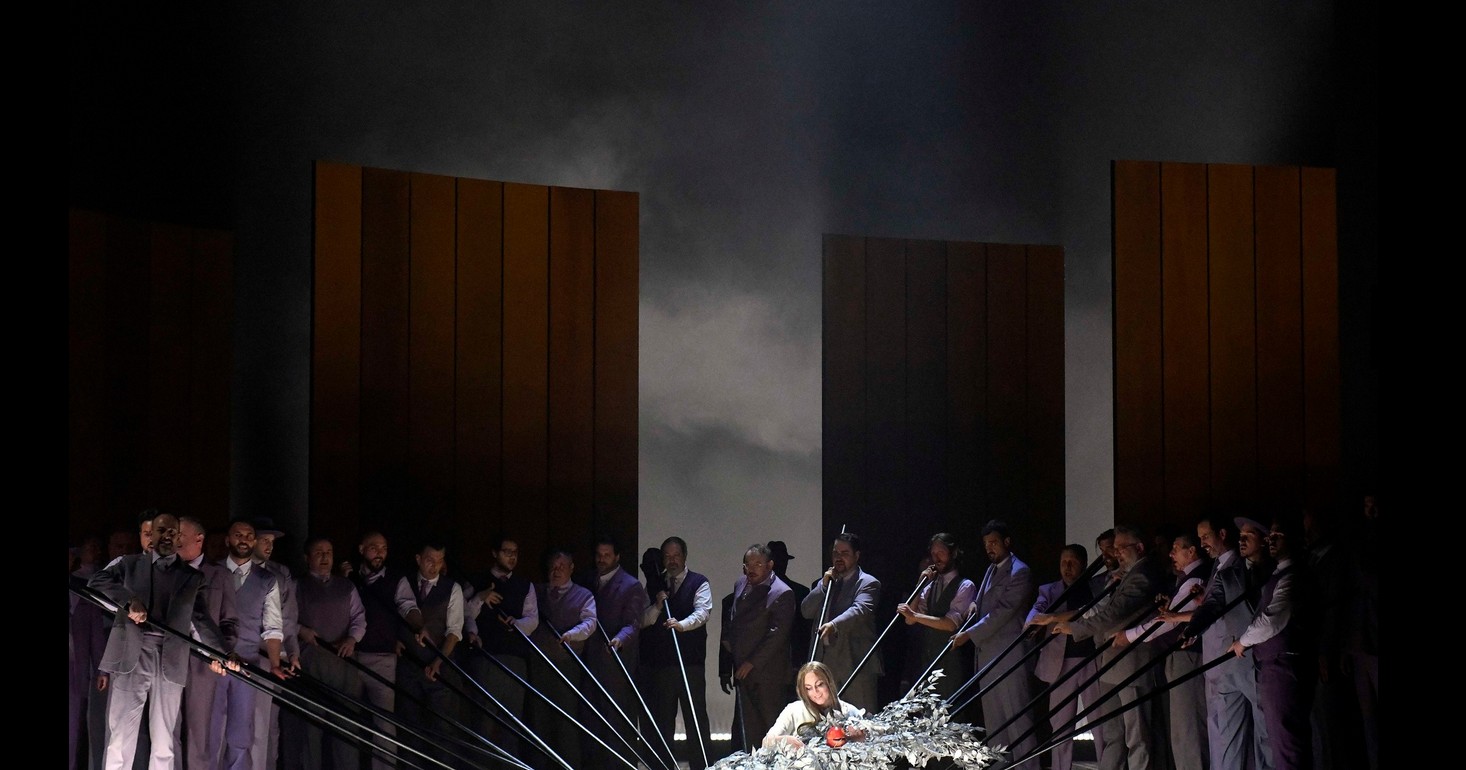
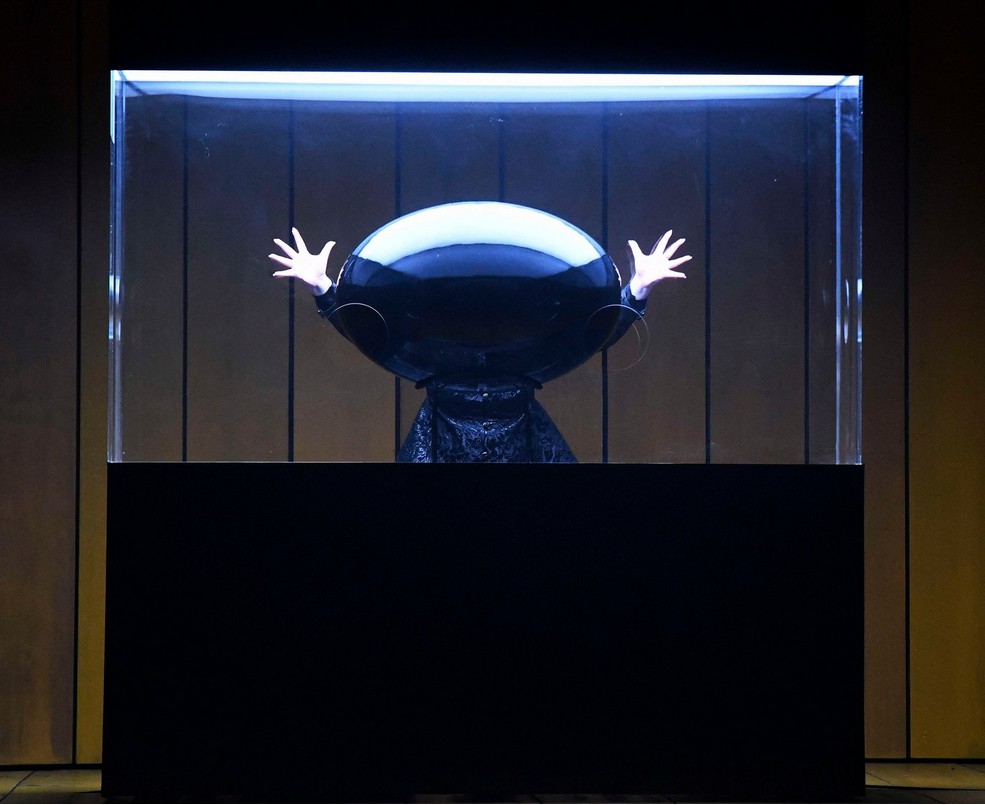
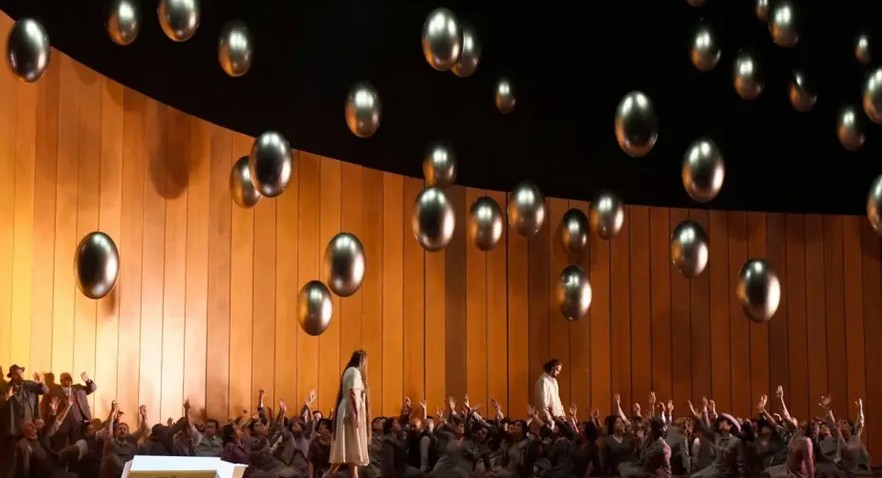
Sarebbe troppo facile etichettare la messa in scena come l’ennesima “michielettata”. Semplicemente non c’è un solo elemento che rapporti la scenografia all’opera. E non si tratta di vieto conservatorismo. Semplicemente sembra di trovarsi davanti a un rompicapo che non ha una soluzione definita e che induce gli spettatori a faticose quanto improbabili interpretazioni. Cosa c’entra la vasca da bagno iniziale con acqua che deborda e nella quale Elsa lava gli indumenti del fratello (vasca che, quale Moloch, si ripresenta nel finale dell’opera)? E che dire di un Lohengrin che arriva dal Monsalvat trascinando (avete capito bene trascinando) a fatica una bara che rappresenterebbe il cigno (forse andato in “panne”, perché alla fine dell’opera viene aperta con spargimento di piume mentre Lohengrin semplicemente scompare?). E perché Heinrich è claudicante? E che dire del povero Friederich von Telramund sconfitto nel duello con Lohengrin non da una spada ma da una melassa piovuta dal cielo e che poi si aggira sul palcoscenico con una canotta stile Bossi ad Arcore? Ma il top è rappresentato da un profluvio di uova che appaiono dal cielo mentre una è presente sul palcoscenico che coperta di vernice nera che progressivamente ricopre il proprio guscio di nero accecando con il colore la povera Elsa. In fondo più facilmente accettabile è il vestito nero anni ’50 di Ortrud completato da cappellino con veletta di ordinanza. Potrei continuare ma sarebbe inutile.
Qui la scenografia non è una parte dell’opera, se vogliamo la sua rappresentazione visiva. Qui semplicemente siamo in presenza di un’azione teatrale (chi non ricorda il terzo atto di Bohème?) avulsa del contesto musicale alla quale dovrebbe fare riferimento. Se la consideriamo come tale, come un’esperienza visiva allora se ne può discutere e in un certo senza avere un suo significato prescindendo però dal fatto che dovrebbe essere legata alla vicenda di Lohengrin. Purtroppo siamo alle solite: un regista che vuole impressionare un pubblico di bocca buona (che però non sembra abboccare nel caso particolare) secondo la regola vigente che è importante soltanto fare parlare di sé indipendentemente da quanto proposto. E sono curioso di leggere le recensioni di chi troverà sicuramente un significato recondito nella scenografia non avendo il coraggio di dire semplicemente che “il re è nudo”.
Peccato perché il lato musicale è invece di qualità a partire dal direttore capace di infondere ai fiati (e soprattutto agli ottoni) il tono e l’intensità necessaria. E anche gli archi giocando una parte importante non dimenticando il “solo” del violoncello all’inizio del secondo atto, semplicemente perfetto. Chi invece non è perfetto è purtroppo Lohengrin (Brian Jagde), che dopo un attacco disastroso del primo atto, non trova mai, mai, il registro giusto fiaccando il personaggio fino al pessimo finale, quello del racconto della sua origine. All’estremo opposto l’Ortrud di Chiara Magini, voce drammatica, potente, insinuante che rende perfettamente il personaggio malvagio e che viene giustamente applaudita dal pubblico alla fine della rappresentazione. Non esaltante la Elsa di Dorothea Herbert che esibisce buone, non eccelse doti vocali ma che fallisce nel secondo atto sia quando si fa sedurre da Ortrud che quando estorce a Lohengrin il segreto della sua origine. Quanto a Claudio Otelli come Friedrich von Telramund gli va perdonata una prestazione non eccezionale a causa di una scellerata regia, ma non sembra comunque eccellere sia come voce che come presenza scenica. Le altre voci nell’ambito di una buona, non eccelsa, professionalità.
 Un buon successo di pubblico che però sembrava più composto da turisti alla ricerca di una esperienza alla Fenice che da intenditori. Una sola contestazione del sovrintendente dai palchi, nessun lancio di foglietti e quindi una serata senza scosse. Se si eccettua invece all’esterno del teatro, prima dell’inizio dell’opera, una vibrante contestazione del sovrintendente. In materia suggerisco di leggere l’elzeviro di Mephisto sul Sol 24 ore di domenica 12 Aprile. L’opera è stata trasmessa in diretta anche da Radio 3 e credo che siano stati più fortunati gli ascoltatori degli spettatori della Fenice .
Cast
Heinrich der Vogler Anthony Robin Schneider
Lohengrin Brian Jagde
Elsa von Brabant Dorothea Herbert
Friedrich von Telramund Claudio Otelli
Ortrud Chiara Mogini
Der Heerrufer des Königs Äneas Humm
Vier brabantische Edle Orlando Polidoro, Nicola Pamio, Paolo Gatti, Arturo Espinosa
Vier Edelknaben Elisa Savino, Lucia Raicevich, Claudia De Pian, Mariateresa Bonera
Herzog Gottfried Pietro Ceccato, Leo Mannise
Conductor Markus Stenz
Director Damiano Michieletto
Dramaturg Mattia Palma
Set designer Paolo Fantin
Costum designer Carla Teti
Lighting designer Alessandro Carletti
La Fenice Orchestra & Choir Chorus Master Alfonso Caiani
Hungarian National Male Choir
Chorus Master Richárd Riederauer
Debbo segnalare che commenti “anonimi” e non inviati ai “commenti” dei posts sono immediatamente cassati
(Giovanni Neri 80)


A coloro che leggono il blog chiederei cortesemente la registrazione (che non comporta nulla). Così facendo riceveranno un e-mail tutte le volte che un nuovo post è pubblicato.
PS Un “blogger” non è un oracolo e commette inevitabilmente errori (il minimo possibile..). Ricevo spesso “correzioni” non sempre fondamentali e non sempre precise. Così come io mi sottopongo al giudizio altrui con nome e cognome così chi vorrà avere la bontà di segnalarmi eventuali errori o imprecisioni dovrà farlo unicamente mandando un commento: a ognuno la propria responsabilità. In base alla nuova normativa chi si fosse iscritto e desidera de-iscriversi è sufficiente che mi invii un messaggio e-mail..
——————————————————————————————————————————————————
It would be far too easy to label the staging as yet another “Michieletto‑style production.” Quite simply, there is not a single element that connects the set design to the opera itself. And this is not a matter of stale conservatism. It simply feels like being confronted with a puzzle that has no clear solution and forces the audience into laborious and improbable interpretations. What is the menaing of the initial bathtub — with water overflowing in which Elsa washes her brother’s clothes — that, like some sort of Moloch, reappears at the end of the opera? And what about a Lohengrin who arrives from Monsalvat dragging (yes, dragging) a coffin that is supposed to represent the swan (perhaps “broken down” since at the end of the opera it is opened and feathers spill out while Lohengrin simply disappears)? And why is Heinrich limping?And what can be said of poor Friedrich von Telramund, defeated in the duel with Lohengrin not by a sword but by some kind of syrup falling from the sky, after which he wanders around the stage wearing a tank top worthy of the italian Bossi? But the top is reached with a deluge of eggs descending from above, while another egg sits onstage, covered in black paint that gradually coats black its shell, blinding poor Elsa with its color. In comparison, Ortrud’s 1950s black dress, complete with the obligatory veiled hat, is almost easy to accept.I could go on, but it would be pointless. Here the set design is not part of the opera — its visual representation, if you will. What we have instead is a theatrical action (who doesn’t remember the third act of La Bohème?) detached from the musical context it should be serving. If we consider it as such, as a purely visual experience, then one might discuss it, and in a certain sense it may even have its own meaning — though entirely unrelated to the story of Lohengrin. Unfortunately, it’s the same old tume: a director eager to impress an undiscerning audience (which, in this case, does not seem to have taken the bait), following the prevailing rule that the only thing that matters is generating buzz, regardless of what is actually being presented. And I am curious to read the reviews of those who will surely find some hidden meaning in the staging, lacking the courage to simply say that “the emperor has no clothes”. A pity, because the musical side was instead of high quality, starting with the conductor, capable of giving the winds (and especially the brass) the tone and intensity required. The strings also played an important role, not to mention the cello solo at the beginning of the second act — simply perfect.Who was not perfect, unfortunately, was Lohengrin (Brian Jagde), who after a disastrous opening in the first act never, ever finds the right register, weakening the character all the way to the dreadful final narration of his origins. At the opposite extreme was Chiara Magini’s Ortrud: a dramatic, powerful, insinuating voice that perfectly embodies the evil character and rightly earned enthusiastic applause at the end. Dorothea Herbert’s Elsa was less impressive: good but not exceptional vocal qualities, and she falters in the second act — both when she lets herself be seduced by Ortrud and when she forces Lohengrin to reveal the secret of his origins . As for Claudio Otelli as Friedrich von Telramund, one must forgive a less‑than‑stellar performance due to the disastrous direction, though he does not seem to excel either vocally or scenically. The other voices were solid, though not outstanding.A good public success, though the audience seemed composed more of tourists seeking a “Fenice experience” than true connoisseurs. Only one protest against the superintendent from the boxes, no leaflet‑throwing, and thus an uneventful evening. Except for the lively protest against the superintendent outside the theatre before the performance began. On that matter, I suggest reading Mephisto’s column in Il Sole 24 Ore from Sunday, April 12.The opera was also broadcasted live on Radio 3, and I believe the listeners were luckier than the audience at La Fenice.
PS I would kindly ask the readers of this blog to register (which implies nothing) which can be easily made by “clicking” the black square above each post. By so doing they will receive an e-mail message whenever a new post is published.
PS A “blogger” is not an oracle and inevitably makes errors (the minimum possible..). I often receive “corrections” not always fundamental and not always accurate. Just as I submit myself to the judgement of others with the name and surname so those who want to have the goodness to report errors or inaccuracies will have to do so only by sending a comment: everyone has his own responsibility.
Per un elenco aggiornato di tutti i precedenti posts di questo blog con i corrispondenti links

Leggete anche i commenti ai posts selezionando il bottone “commenti” sulla sinistra del post. Talvolta sono persino più interessanti del post stesso!!!
PS Vorrei ringraziare tutti coloro che inseriscono commenti ai posts utilizzando l’opzione “Lascia un commento” (o “commenti” se ne sono già stati inseriti) prevista nella sezione sinistra (o prima del testo per schermi ridotti come i tablets) dei posts stessi affinchè tutti possano leggerli. Il dibattito è sempre interessante per tutti…..grazie (è indispensabile lasciare nome e cognome – i commenti anonimi non saranno pubblicati)!!
 Kurvenal: le recensioni musicali